
When it comes to engagement rings, diamonds have long been the go-to choice. They’re timeless, durable, and sparkle like no other. But in recent years, more couples are exploring alternative stones — whether for budget-friendly reasons, ethical considerations, or simply to have something more unique.
In fact, it’s been more than 500 years since Archduke Maximilian of Austria presented Mary of Burgundy with the first diamond engagement ring. Diamonds have come to symbolize purity, faithfulness, love, and luxury. Still the most popular option for an engagement ring today, diamonds are incredibly strong so they can be worn everyday without worry.
Before we dive into the alternatives, it helps to understand exactly what we mean by a diamond — and how lab-grown versions compare.
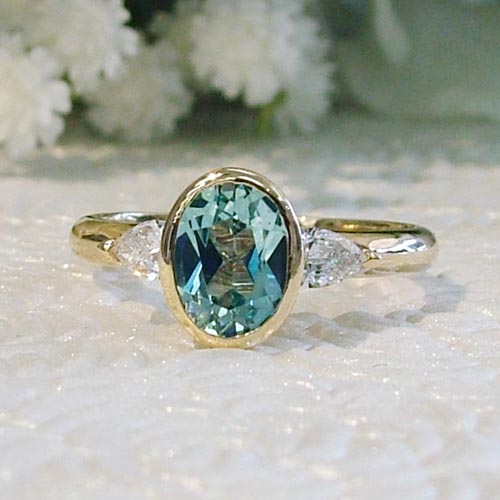
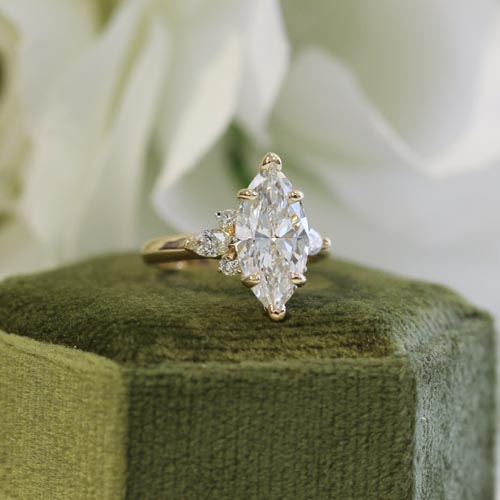
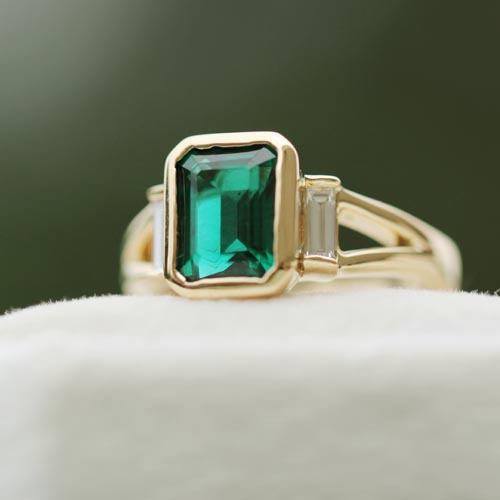
What Is a Natural Diamond?
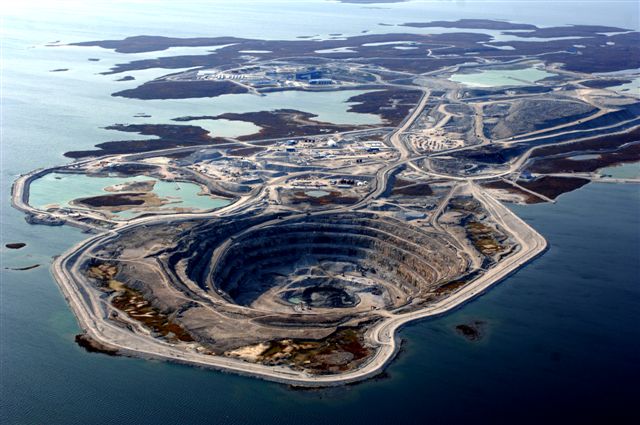
A natural diamond is a crystal made entirely of carbon atoms arranged in a unique structure called a diamond lattice. It forms deep within the Earth’s mantle under extreme heat and pressure over billions of years, before being brought closer to the surface by volcanic activity. Natural diamonds are prized for their unmatched hardness (a 10 on the Mohs scale), exceptional sparkle, and enduring symbolism of love and commitment.
What Is a Lab-Grown Diamond?
A lab-grown diamond is a real diamond created in a controlled laboratory environment that replicates the natural conditions under which diamonds form in the Earth. Using advanced technology, such as High Pressure High Temperature (HPHT) or Chemical Vapor Deposition (CVD), scientists produce diamonds that are chemically, physically, and optically identical to mined diamonds. The main differences are their origin and typically a lower cost, as well as the ability to ensure an ethical, conflict-free source.
Learn more about lab-grown diamonds
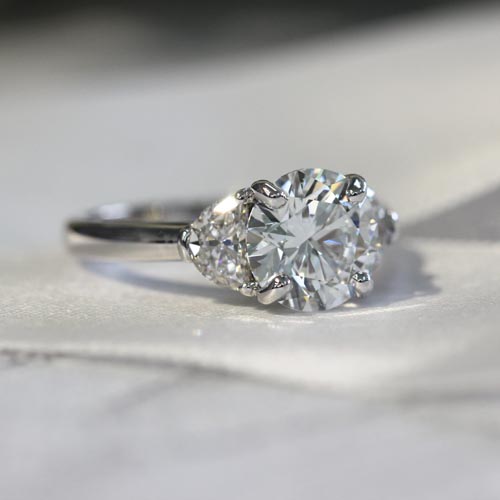
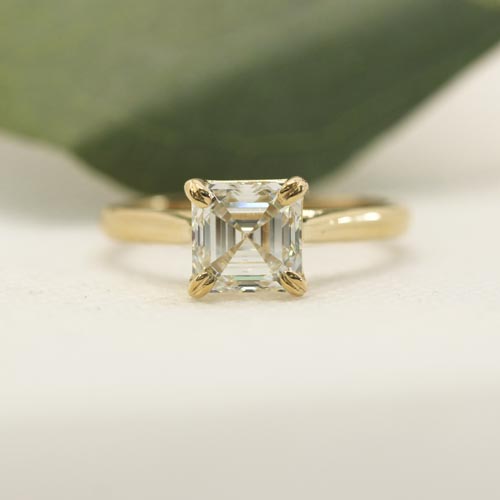
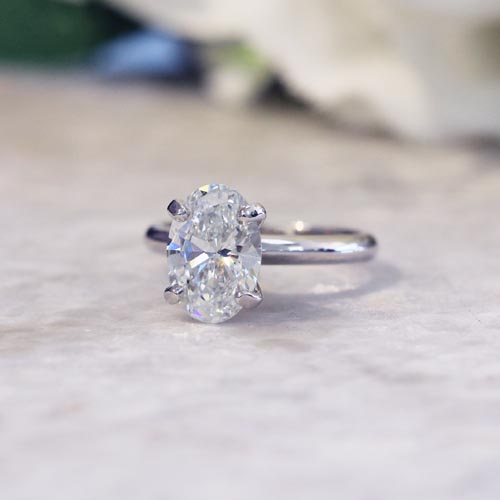
Top Diamond Alternatives for Your Engagement Ring
If a natural diamond is not your vibe, then here’s some great alternatives for your engagement ring.
1. Lab-Grown Diamonds
If you love the look and durability of a diamond but want a more affordable or eco-conscious option, lab-grown diamonds are a perfect choice. They offer the same brilliance and hardness as mined diamonds but can cost up to 80% less.
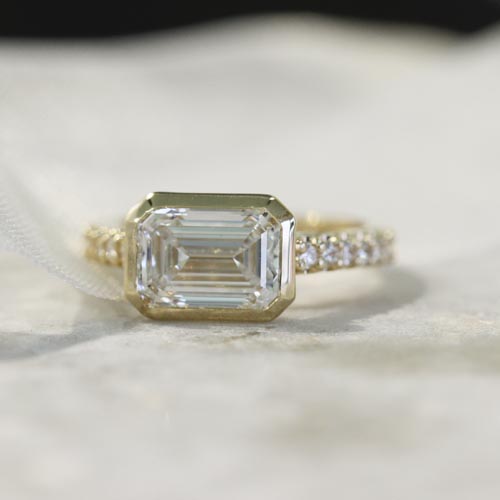
Why choose lab-grown?
- Conflict-free and sustainable
- Lower price for the same quality
- Endless customization options
Cons of lab-grown
- Low prices mean less options if you want to trade up in size later
- Not all lab diamonds are the same, so you still need guidance from a reputable jeweler
2. Moissanite
Moissanite is a popular diamond substitute known for its white color and brilliance. It’s also almost as hard as a diamond, making it a great choice for everyday wear.
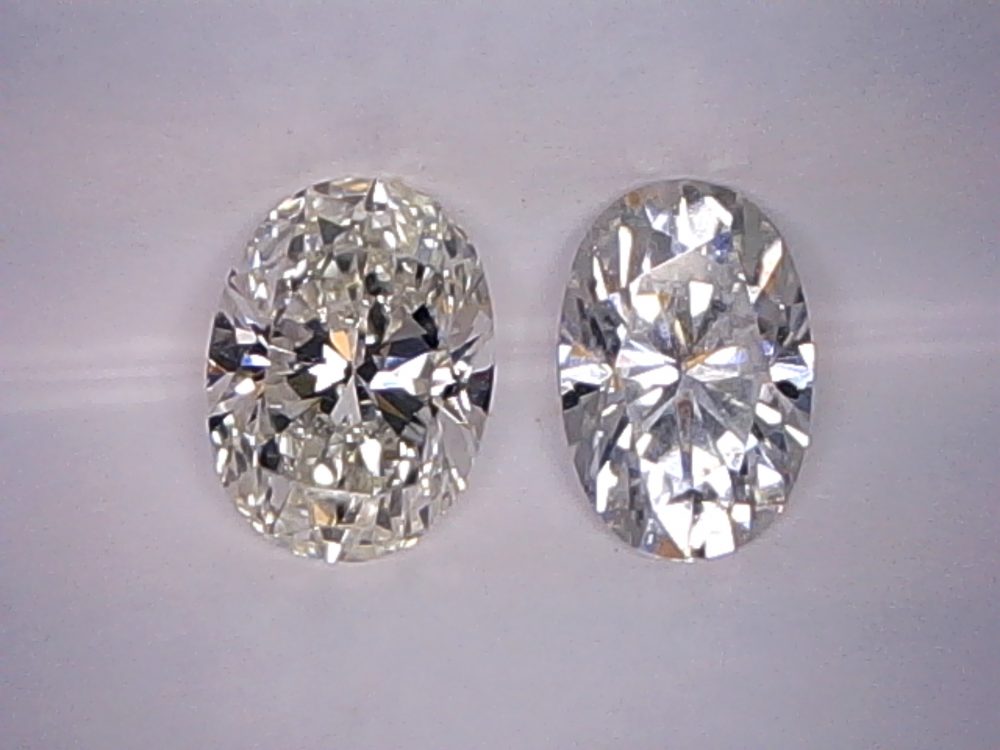
Why choose moissanite?
- Exceptional sparkle and fire
- Very durable (9.25 on the Mohs scale)
- More affordable than both mined and lab diamonds
Cons of moissanite
- The stone is so hard, it’s brittle and tends to break off in large shards or chunks when it’s hit
- Large moissanite stones have a blue or even a rainbow cast to them that’s often distracting
- Little or no resale value
Compare moissanite vs diamonds
3. Sapphires
Thanks to a certain royal blue sapphire ring worn by Princess Diana (and now Kate Middleton), sapphires have become a romantic alternative to diamonds. While blue is the most famous color, sapphires also come in all colors of the rainbow.
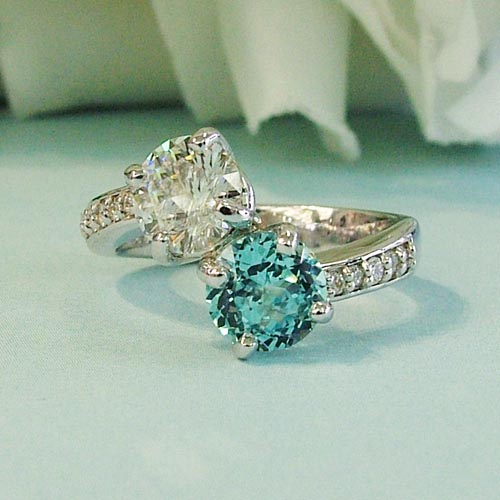
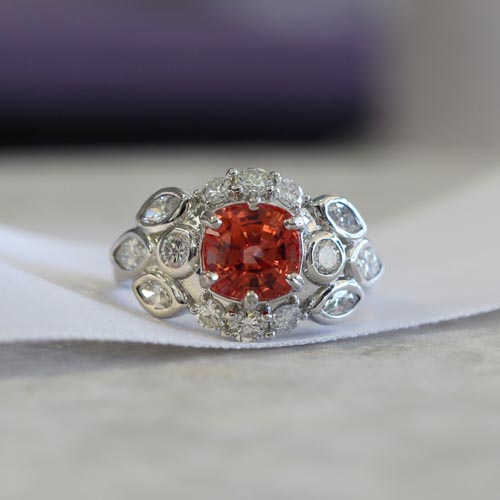
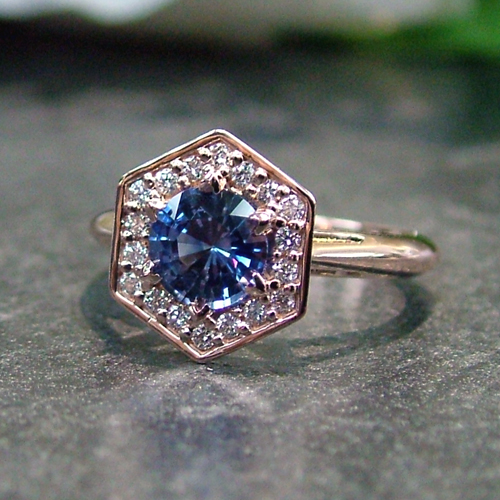
Why choose sapphires?
- Rich color options for a personalized look
- Extremely durable (9 on the Mohs scale)
- Lab grown sapphire offer a sustainable and conflict free option, while also being extremely affordable
Cons of sapphires
- Natural sapphires have the same human-rights issues as natural diamonds
- Lab grown sapphires tend to be all the same, uniform shade
See our sapphire engagement ring designs
4. Emeralds
For a bold and vibrant engagement ring, emeralds offer a lush green hue that’s instantly captivating. They do require more care than diamonds or sapphires since they are softer and can be prone to chipping.
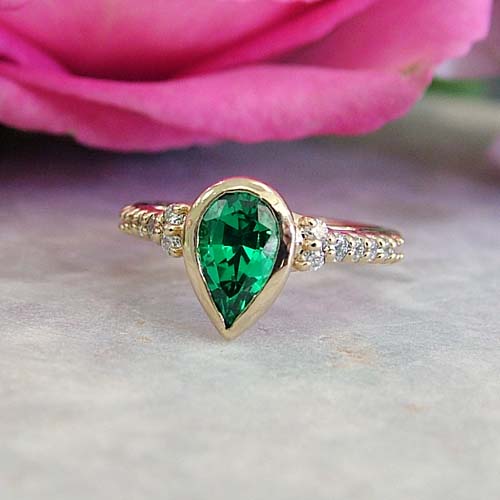
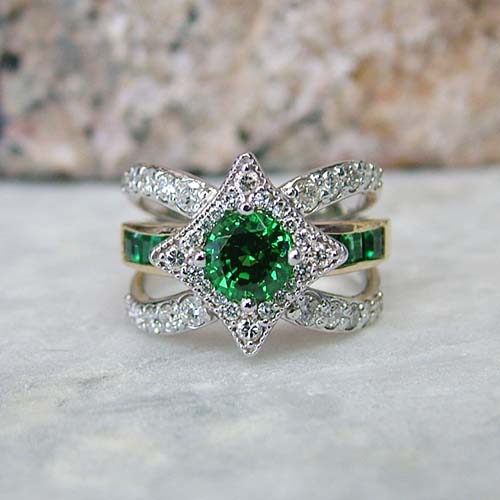
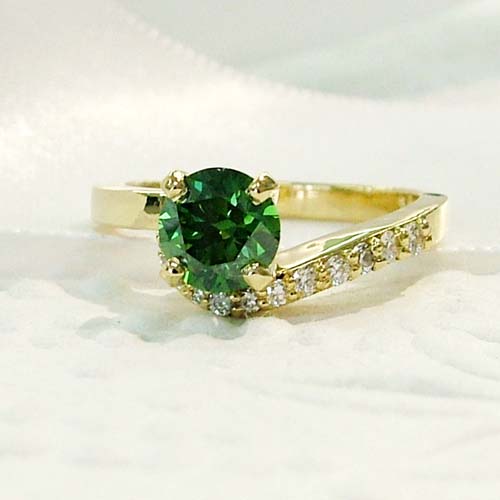
Why choose emeralds?
- Distinctive, vivid green color
- A luxurious and romantic choice
- Perfect for vintage-inspired designs
- Lab grown emeralds are harder than mined and a good choice in rings
Cons of emeralds
- Natural emeralds have many inclusions or fault lines in them, and often break
- Mined emeralds can be as pricey as natural diamonds
- Small natural emeralds vary in shade, making them hard to match
Frequently Asked Questions About Diamond Alternatives
1. Are diamond alternatives as durable as diamonds?
Not always. Diamonds score a 10 on the Mohs scale, making them the hardest gemstone. Moissanite and sapphires are softer, but are also excellent for everyday wear, while softer stones like emeralds require more care.
2. Will people be able to tell if I don’t have a natural diamond?
In most cases, no. Lab-grown diamonds and natural diamonds are can’t be distinguishable by the naked eye without special equipment. Moissanite and white sapphires can look similar to natural diamonds because they are a clear gem, but they do not have the same sparkle as diamonds (both mined and lab created.)
3. Are lab-grown diamonds considered “fake”?
Not at all. Lab-grown diamonds are chemically and physically identical to mined diamonds — the only difference is their origin. Plus they are sustainable and conflict free. They also are less expensive than natural diamonds making them a win in all the columns!
4. Which diamond alternative is the most affordable?
Moissanite is often the most budget-friendly, followed by lab-grown diamonds and lab grown colored gems.
5. How do I care for a softer gemstone?
If you choose a softer stone like emerald, opt for a protective setting, avoid harsh impacts, and clean it gently with warm soapy water.
The truth about lab-grown diamonds
Choosing Your Perfect Stone
When picking a diamond alternative, think about your lifestyle, budget, and personal style. Some stones, like lab diamonds or sapphires, are excellent for daily wear, while softer stones like emerald may need more care.
And remember — the most important thing is that your engagement ring reflects your story. Whether it’s a sparkling lab-grown diamond or a vibrant sapphire, the right ring is the one that feels perfectly you.
Explore our custom engagement ring process
Ready to explore your options?
At Scott’s Custom Jewelers, we specialize in creating one-of-a-kind engagement rings with any stone you love. Whether you’re repurposing family diamonds or are set on a diamond alternative, we’ll help you design a custom ring that’s as unique as your love story.