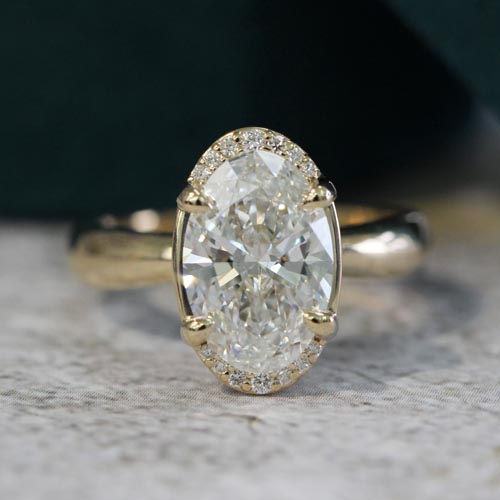
You’ve done your homework. You’ve seen the price difference. You’ve heard the talking points on both sides. And now you’re wondering: which one – lab grown vs mined diamond – is actually the right choice for me?
Here’s the thing most people in the jewelry industry won’t tell you: there’s no universally right answer, but there is a right answer for your situation. And figuring that out is a lot simpler than the diamond industry would have you believe.
We’re Scott’s Custom Jewelers, a fourth-generation family jewelry store in Dublin, Ohio. We’ve been making custom engagement rings in the Columbus area for over 99 years, and for the past nine years, we’ve worked extensively with both lab grown and mined diamonds. We know our stuff!
So here’s the honest, no-marketing-spin breakdown of what you actually need to know before you buy any diamond.
Are Lab Grown Diamonds Real Diamonds?
Let’s start here, because this question still causes confusion. Yes, absolutely, a lab created diamond is a real diamond. Not a simulant, not a fake, not a “diamond alternative.”
Lab grown diamonds are chemically, physically, and optically identical to diamonds mined from the earth. That’s not a marketing claim – it’s the position of the Federal Trade Commission, which updated its guidelines in 2018 to reflect that lab diamonds are, in fact, real diamonds. The only difference is their origin: one formed underground over billions of years, and one was grown in a highly controlled laboratory environment in a matter of weeks.
Can a jeweler tell if my diamond is lab grown or mined?
Short answer: no. Without a very expensive piece of equipment, no jeweler can tell the difference between a lab grown diamond and a mined one by simply looking at it. Both lab and mined diamonds are graded using the same 4Cs — cut, carat, color, and clarity.
But, some mined diamonds, and most larger lab diamonds now also carry a laser-etched certification number on the girdle of the stone (it’s teeny tiny!) that does show the lab where it was graded, and will identify if it’s mined or lab created. A jeweler can easily look up that number and identify the origin.
Think of diamonds this way: a tomato grown in a greenhouse and a tomato grown in a garden are both tomatoes. The greenhouse version is often more consistent in quality (and usually costs less) because the environment is controlled. The garden version has a longer, more unpredictable story behind it. Yet, both are real tomatoes. Same with diamonds.
How Much Cheaper Are Lab Grown Diamonds Than Mined Ones?
This is where the numbers get interesting. Lab grown diamonds currently cost somewhere between 80 and 90% less than mined diamonds of comparable quality. That’s not a small difference.
Consider this: a well-cut 2-carat mined diamond that is graded at F/VS might run about $18,000 to $25,000. But a lab grown 2-carat diamond of equivalent quality only cost $1,800 to $2,000. Yikes! That’s money that can go toward a house, a honeymoon, or a much more elaborate custom ring setting than you thought you could afford.
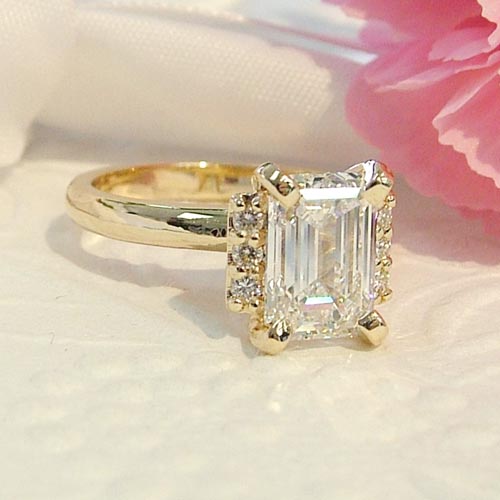
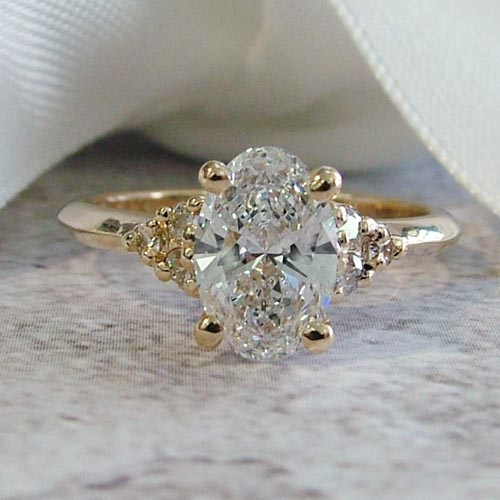
At Scott’s, we consistently see couples who come in with a modest budget leave with significantly larger and more dramatic stones than they expected, simply because they’re open to lab grown diamonds. And the rings are stunning, btw.
Let’s Talk About Resale Value — Honestly
This is the question everyone dances around, and we’re not going to do that. Here’s the honest truth on lab diamond vs. mined diamond resale value:
Lab grown diamonds do not hold resale value well. Most will retain somewhere between 10 and 20% of their original purchase price in the secondary market. That sounds harsh until you compare it to mined diamonds, which also only retain 10 to 20% of their retail price. The reality is that diamonds have long been marketed as investments. But they really are not!
The math that most people miss: if you buy a $20,000 mined diamond and are able to sell it for 20% of value, you get $4,000 back, but you’ve lost $16,000 of your investment. But if you buy a $2,000 lab diamond and resells for $200, you’ve only lost $1800. In absolute dollar terms, the person who bought the lab diamond almost always comes out ahead. And that’s why people come to us to restyle their old diamonds into new pieces!
Unless you’re purchasing rare investment-grade colored diamonds or exceptionally large, flawless stones, no diamond – mined or lab grown – is a reliable financial investment. Jewelry is not a savings account. It’s a symbol.
If you’re buying an engagement ring because you love each other, because the ring means something, because you want it to be beautiful and meaningful, lab grown diamonds, or a family diamond that is repurposed, is a financially smart choice that sacrifices nothing in quality or beauty.
If you have a strong personal or sentimental reasons to prefer a mined stone, that’s also a completely valid choice. We offer conflict-free mined diamonds too, and we’ll help you find something extraordinary at either price point.
What Is the Quality Difference Between Lab and Earth-Mined Diamonds?
In most practical senses, there isn’t one. Both types are graded on the 4Cs. Both can have excellent cut, high color grades, and minimal inclusions. If anything, lab diamonds tend to be more consistent because production is controlled. You rarely see the wide quality variances that can show up in mined stones.
One technical distinction: GIA recently announced it will use a simplified two-tier grading system (Premium and Standard) for lab diamonds rather than the full 4C scale. This reflects the fact that about 95% of lab diamonds have the same high quality grades, a testament to how precise and consistent the growing process has become.
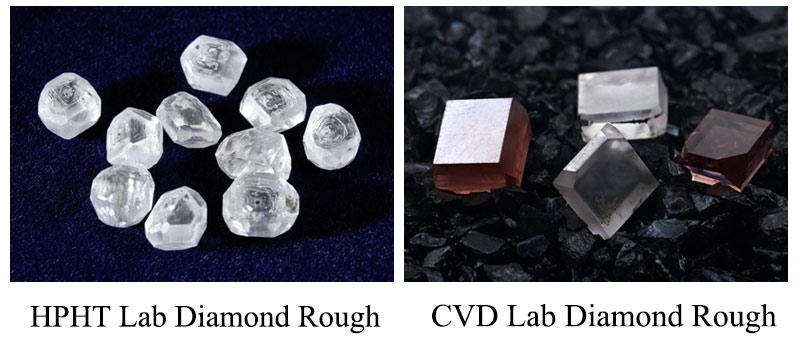
By the way, there are two techniques to produce lab diamonds – HPHT (High Pressure High Temperature) and CVD (Chemical Vapor Deposition). Both methods produce genuine, gemstone-quality diamonds.
At Scott’s, we are all about sustainability. All of the lab diamonds we source come from companies that use solar power in their production process and pay livable wages to their employees because this ethical decision is something many of our clients care deeply about.
How to Pick a Lab Diamond That Sparkles as Much as Natural
The secret to a firecracker of a diamond is almost entirely in the cut. A well-cut diamond will always outperform a poorly cut diamond, both lab and mined. We tell our customers to always prioritize cut quality first — then color and clarity.
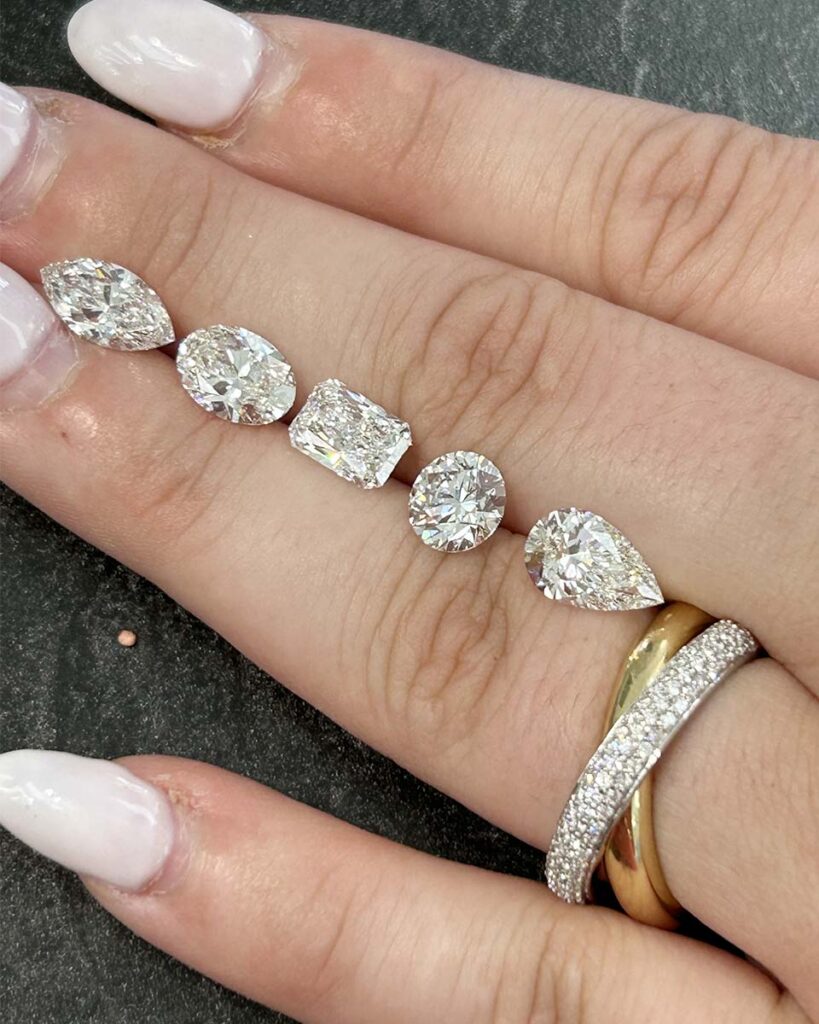
For a round brilliant diamond, look for an Excellent or Ideal cut grade. For fancy shapes (oval, pear, cushion, radiant), you’re going to need some professional advise, so work with a jeweler you trust and evaluate the gemstone in person. This is one reason we always encourage clients to visit us in Dublin — looking at diamonds in person, in good lighting, tells you more than any certificate will.
So here are some tips when working with your jeweler:
Prioritize Excellent or Very Good cut grades
For colorless appearance, color grades D–G are ideal (H–J are often eye-clean and more budget-friendly when you are choosing a mined diamond)
VS1 or VS2 clarity is typically the sweet spot and most lab diamonds fall in this category. Again for budget reasons, SI or SI1 clarity is somewhat clean to the naked eye and affordable for mined diamonds
Look for an IGI or GIA certificate for any lab diamond over 0.75 carats
Ask your jeweler to show you the stone in natural light, not just under display lighting
The Conflict-Free and Sustainability Angle
Lab grown diamonds are inherently conflict-free. There’s no supply chain to trace back to a mining region. For many couples – especially those with ethical concerns about the traditional diamond industry, this is a significant factor.
At Scott’s Custom Jewelers, we guarantee that all diamonds we provide, whether mined or lab grown, come from conflict-free sources. And we only use recycled, purified gold in our casting process. In fact, we’ve never needed to purchase newly mined gold, sustainable gold.
Also, when we first started offering lab grown diamonds to our customers, we make a decision to give back to the community even more, so when you purchase a lab grown diamond from Scott’s, we make a donation to the Dublin Food Pantry as part of our community commitment. It’s a small thing, but it means something to us.
So, Are Lab Grown Diamonds Worth Buying for an Engagement Ring?
For the overwhelming majority of couples we work with in Columbus and Dublin, the answer is yes. You get an identical stone in every way that matters visually and emotionally, at a fraction of the cost, with full ethical peace of mind, and more budget left over to put toward a more impressive custom design.
But this isn’t a one-size-fits-all answer. If you want a mined stone for personal, traditional, or investment reasons, we fully support that too. The best decision is the one that fits your values, your priorities, and your budget. If you’re trying to figure out which direction is right for you, the best thing you can do is come in and look at both side by side. We have lab grown and mined diamonds available, and our team is genuinely good at helping you find your style without pressure.
Ready to see what your budget can really do? Schedule a free design consultation at Scott’s Custom Jewelers in Dublin, Ohio — in-person or virtually. We’ll show you exactly what’s possible.